- Solution area:Regulations and compliance ,Social participation and engagement ,Technological innovation ,
- Аdministrative level:State ,Federation ,
- Solution process:Digitization and technology ,Integration, inclusion, diversity ,Public service ,
- Technology:Artificial Intelligence ,Information technology ,
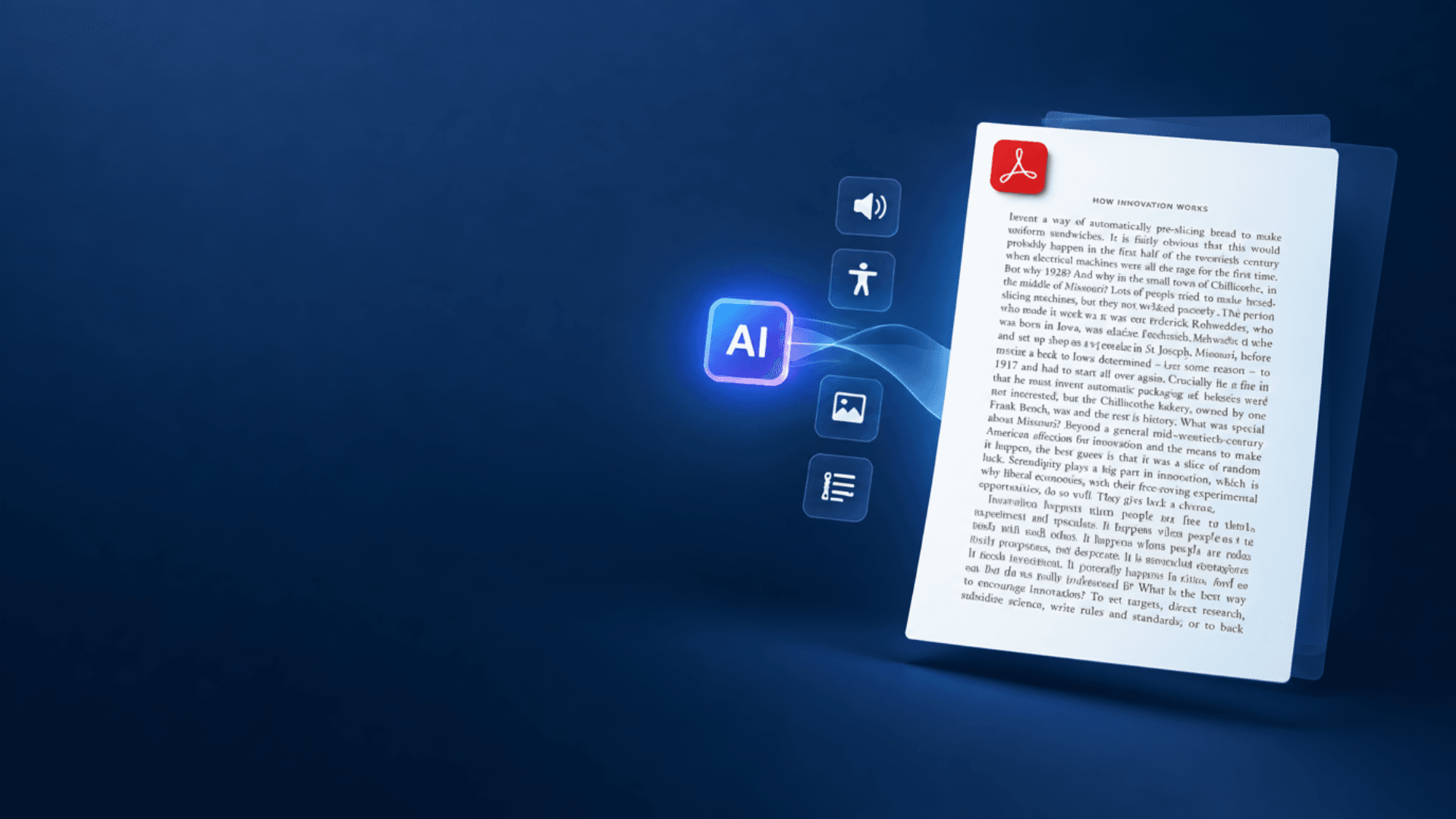
AI-powered PDF accessibility
Making digital documents accessible, compliant and easier to use
Accessible digital documents are essential for inclusive public services and digital participation. An AI-powered PDF accessibility solution converts Word, PowerPoint and PDF files – including scanned documents – into accessible, PDF/UA-compliant PDFs. It combines automated document remediation with human review, helping organisations improve accessibility while significantly reducing the manual effort involved.
The solution doclarity was developed around the requirements of Austrian federal ministries and leading associations for blind and visually impaired people. According to the submitted information, around 100 organisations from public administration, higher education, social insurance and the private sector are currently testing the technology.
Download PDF
Quick Facts
How it works
Documents can be uploaded individually or in batches. The AI-powered document accessibility process removes incorrect tags and rebuilds the document structure based on its actual content, including headings, paragraphs, lists, tables and links. It can also draft alternative text for images, correct reading order and heading levels, and adjust text contrast to the selected WCAG level.
Accessibility is checked on three levels: PDF/UA compliance is validated using veraPDF, relevant WCAG 2.1 success criteria are assessed, and an AI-based semantic check evaluates whether alternative texts accurately describe their content and whether the reading order is meaningful. Each processed document is accompanied by an accessibility report.
The approach follows a human-in-the-loop model: AI prepares the accessibility improvements, while specialists review and approve them in an editor. According to the submission, doclarity can reduce manual effort per document by around 95%, turning a process that may take a full working day into one that can be completed in minutes. EU-based processing is available for sensitive documents, with on-premise deployment available on request.
The Big Picture
Accessible PDF documents improve digital participation for a broad range of users, including blind and visually impaired people, older people, people with dyslexia or reading difficulties, and people with motor impairments. Properly tagged PDFs can be read by screen readers, enlarged, reflowed and navigated using a keyboard. This can make public documents such as official notices, forms and funding applications more independently accessible.
The relevance for Austria’s public sector is illustrated by an analysis cited in the submission: of 11,757 federal PDFs from five ministries assessed in August 2026, only 24.9% passed PDF/UA validation. By combining automation, verifiable accessibility checks and human oversight, the approach can help public institutions address larger document collections while retaining accessibility expertise and quality control in-house.
Image: Unsplash